
 English
 Español
 عربى
عربى русский
SUV Car Covers: The Practical Problems They Must Solve Outdoors
SUV car covers are often purchased for “general protection,” but outdoor storage has a few predictable failure modes: heat/UV stress, abrasive contamination (dust/sand/pollen), moisture trapping, and wind lift. A cover that performs well is the one designed around these realities rather than marketing terms.
Heat and UV are usually the most expensive long-term issues because they accelerate clear-coat oxidation, plastic embrittlement, and interior trim aging. On clear sunny days, research on parked vehicles shows the cabin can rise dramatically above ambient—e.g., 117°F (47°C) within 60 minutes when ambient was 72°F (22°C), with most of the rise occurring early. This is why many buyers start their search in the full car cover category and then narrow down by material technology.
Typical outdoor threats (and what “good” looks like)
- UV + heat: reflective/insulating outer layer or UV-stable fabric, plus stable seams to avoid premature cracking.
- Dust, grit, and industrial fallout: a surface that sheds particles, with a lining/inner contact surface that reduces scuffing when installed correctly.
- Rain, snow, tree sap, bird droppings: water resistance and contaminant barrier, paired with ventilation strategy so moisture does not stay trapped.
- Wind: secure retention (elastic hem + straps/anchors) to prevent flapping that can mark paint and tear seams.
Fit and Coverage: How to Size SUV Car Covers Correctly
Fit is not just aesthetics; it directly affects wind resistance and paint safety. An oversized cover tends to flap, which increases abrasion and seam fatigue. A cover that is too tight strains stitching at mirrors, spoilers, roof rails, and bumper corners.
A measurement workflow that prevents “almost fits”
- Measure overall length (front bumper to rear bumper) on level ground.
- Measure width at the widest point (often mirror-to-mirror); note if mirrors fold.
- Measure height to the highest fixed point (roof rails, crossbars, antenna base).
- List protrusions: roof racks, rear spoilers, tow hooks, spare tire mounts, side steps.
- Confirm usage: daily on/off vs. long-term storage (this changes how much “ease” you can tolerate).
If you are buying for a fleet (multiple SUV models), provide a model list and your “worst-case” dimensions to the supplier so patterns can be graded appropriately. This avoids a common mistake: selecting by length only and discovering the cover binds at roof accessories.
Fit details worth requesting from a supplier
- Elastic hem tension (too weak flaps; too strong can “creep” upward on tall SUVs).
- Mirror pocket allowance and reinforcement strategy (a frequent tear point).
- Strap location geometry (must match SUV underbody clearance and avoid exhaust heat zones).
Material Selection for SUV Car Covers
Material is where “SUV car covers” diverge most in real-world performance. SUV body height and surface area amplify both solar load and wind load, so a fabric that is adequate on a sedan may underperform on a tall crossover parked outdoors.
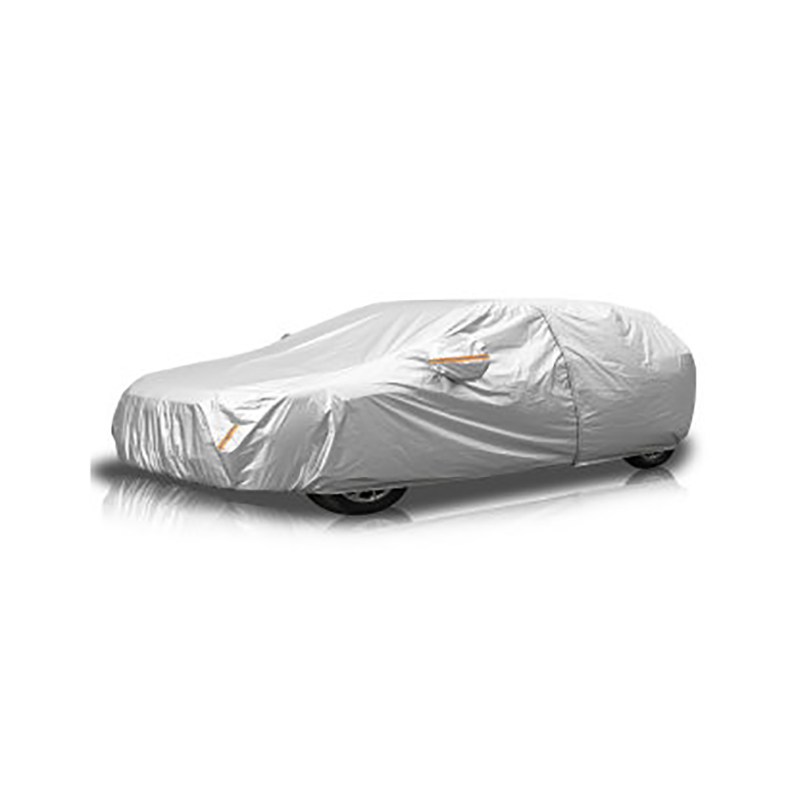
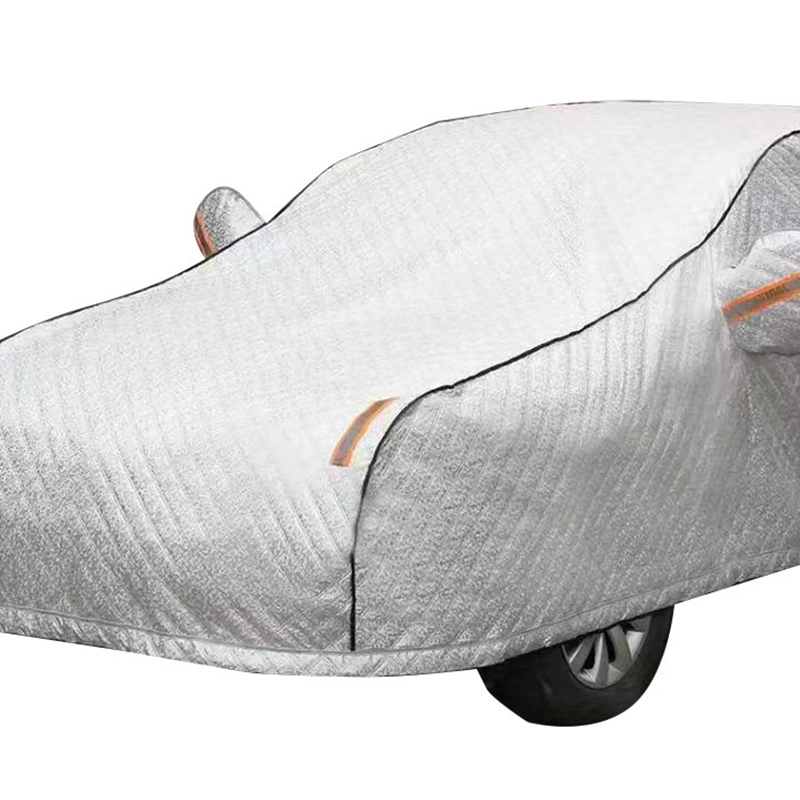
If your use case is strong sun exposure, the most straightforward performance lever is a reflective/insulating layer. In aluminum-film designs, the aluminum layer is intended to reflect sunlight and heat away from the vehicle surface—one reason many buyers compare options inside the aluminum film full car cover range before choosing a specific SUV fit.
| Material family | Best for | Strengths | Trade-offs to manage |
|---|---|---|---|
| Aluminum film (reflective) | High sun/heat exposure, outdoor parking | Heat reflection, UV barrier effect, durable outer surface | Ensure a ventilation strategy to avoid trapped moisture; verify seam quality for larger SUV panels |
| Oxford cloth (heavy-duty woven) | Windier locations, rougher handling | High tear resistance, good structure for large vehicles | Bulkier storage; verify surface softness/lining to reduce scuff risk |
| Polyester taffeta (lightweight woven) | Frequent on/off, mild climates, dust protection | Easy handling, compact storage, cost-effective | May need enhanced UV/water finishing for long-term outdoor use |
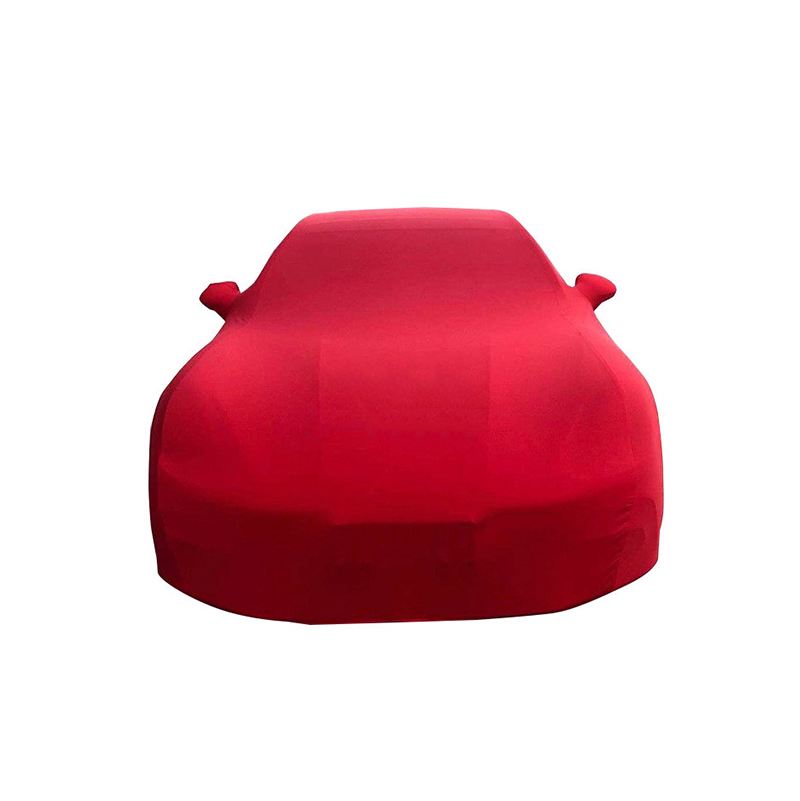
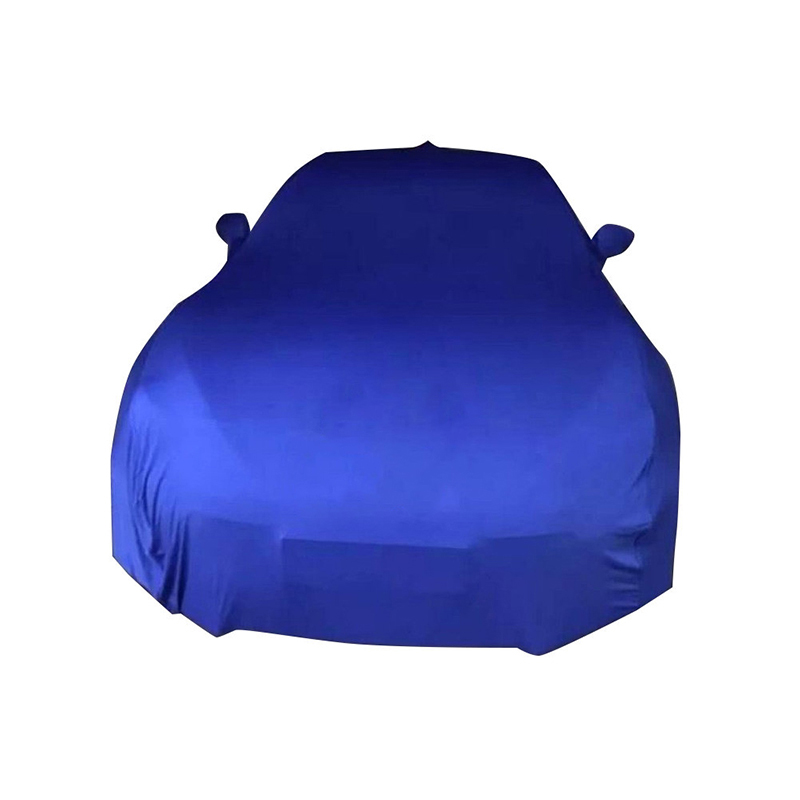
| Elastic fabric (stretch fit) | Cleaner environments, tighter visual fit | Snug fit reduces flapping; easier fit across similar SUV sizes | Confirm outdoor UV stability; avoid overstretch at sharp SUV corners |
| PEVA (film-based barrier) | Shorter-term rain/dust barrier needs | Strong water barrier; wipes clean easily | Breathability must be addressed to reduce condensation risk |
For procurement, the most useful “spec” is not only the fabric name, but the construction details: seam density, reinforcement at stress points, and how water resistance is balanced with breathability. Those variables are what separate a cover that lasts multiple seasons from one that fails at the first windy month.
Breathability, Moisture, and Paint Safety (How to Avoid Common Mistakes)
Many complaints about SUV car covers are not “material defects,” but usage mismatches: covering a wet vehicle, trapping ground moisture, or allowing grit to sit between the cover and paint. The result can be mildew odor, corrosion risk, and surface marring.
A practical anti-mildew routine
- Only cover when the SUV surface is fully dry (including seams, door handles, and roof rails).
- If your area has high humidity or large day/night temperature swings, prioritize breathable constructions or ventilation features.
- Remove the cover periodically to vent the vehicle, especially after heavy rain.
- Keep the cover’s inner contact surface clean; embedded dust behaves like sandpaper during installation.
As a manufacturer, we advise buyers to treat breathability as a design parameter, not a slogan. If you need a stronger water barrier, ask how the cover manages condensation (material selection, vents, or controlled permeability), because “fully sealed” designs can trap moisture for extended periods.
Wind Resistance for SUV Car Covers: Preventing Lift, Flap, and Seam Failure
SUVs present a larger “sail area” than many passenger cars, especially along the sides. In wind, the problem is not only the cover blowing off; repeated flapping can abrade paint and fatigue stitches.
Retention features that matter (and why)
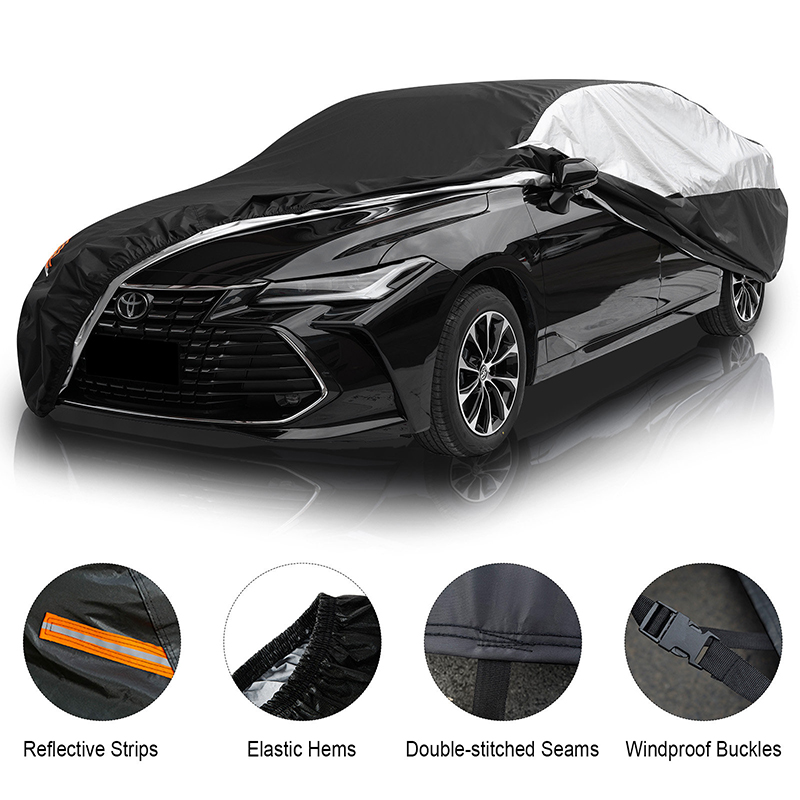
- Elastic hem: provides baseline grip around the perimeter and reduces “ballooning.”
- Underbody straps (front-to-rear or cross straps): prevents lift in gusts; should be positioned to avoid hot exhaust zones.
- Reinforced seams at corners and mirrors: concentrates stress where wind load is highest.
- Optional external gust straps: adds security without overtightening the entire hem.
If you are sourcing SUV car covers for resale, ask the supplier for a retention diagram (where straps land relative to common SUV underbodies) and the reinforcement plan (what is doubled, bound, or taped). These are straightforward checks that reduce returns.
When Heat-Reflective Aluminum Film SUV Covers Are the Best Choice
If your SUV is parked outdoors in strong sun, reflective materials can be a high-impact choice because they reduce solar absorption at the surface. For many customers, the goal is practical: stabilize cabin conditions and reduce UV-driven aging of paint and trim.
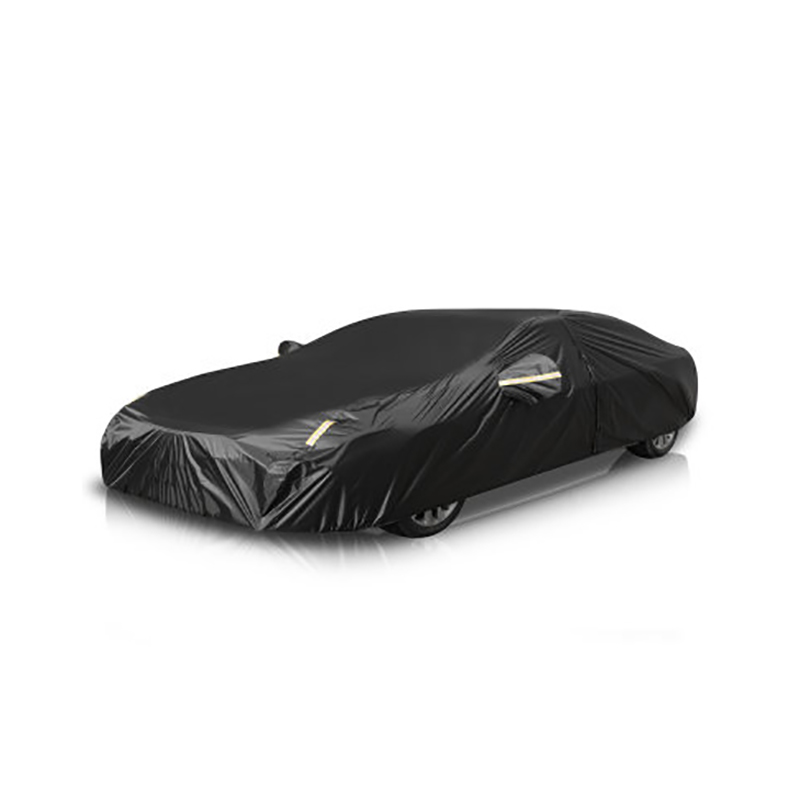
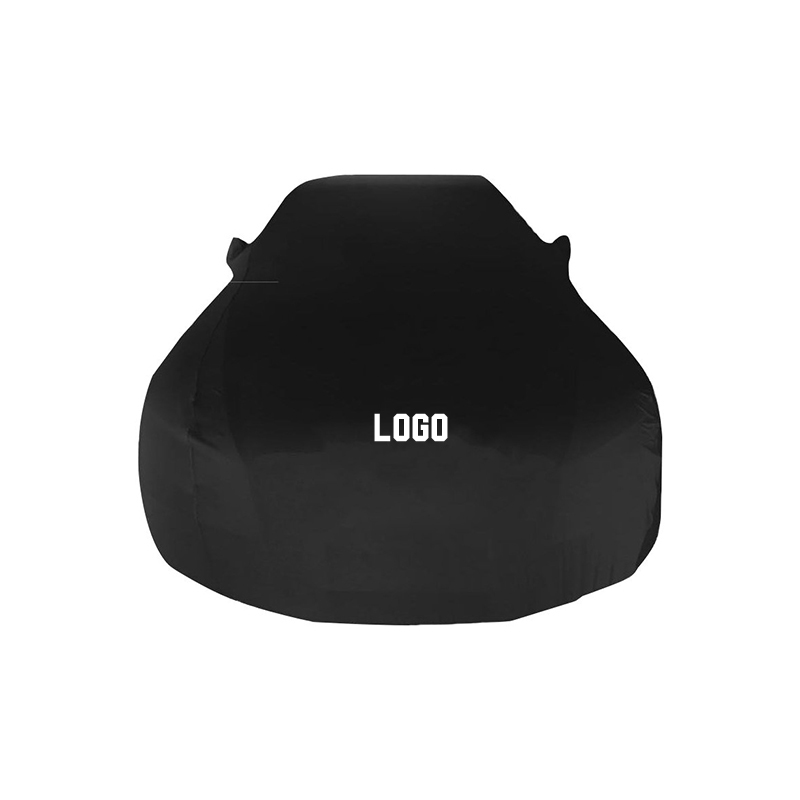
Aluminum-film constructions are designed to reflect sunlight and heat, acting as a protective barrier against UV while maintaining a durable outer layer. In our aluminum-film lineup, the black aluminum film SUV car full cover is built to protect against scratches, dust, dirt, and ultraviolet exposure, while the aluminum film structure is intended to reduce temperature swings by reflecting harmful rays.
Who typically benefits most
- Drivers in high-UV regions (frequent direct sun, minimal shade).
- Owners protecting exterior finish and interior surfaces during multi-day or multi-week outdoor parking.
- Fleets and dealers needing consistent exterior presentation (dust control plus solar protection).
Selection tip: pair reflective performance with correct sizing and retention. A reflective cover that flaps in wind is still a paint risk; conversely, a secure fit makes any material perform closer to its design intent.
Care, Cleaning, and What to Ask a Manufacturer Before You Buy
The best SUV car covers are maintained, not “set and forget.” Cleaning prevents abrasive particles from accumulating; correct drying prevents mildew; and proper storage avoids creasing damage and odor.
A simple cleaning standard that reduces wear
- Spot clean small stains with mild detergent and rinse thoroughly.
- If washing the full cover, use gentle methods (hand wash or gentle cycle where appropriate) and avoid harsh chemicals.
- Air dry completely before folding or reinstalling; storing damp covers is a primary cause of odor and mildew.
RFQ checklist for distributors, fleets, and importers
- Usage scenario: daily use vs. long-term storage; indoor vs. outdoor; high wind vs. sheltered parking.
- Material + construction: fabric family, reflective layer type (if applicable), seam reinforcement plan, and retention configuration.
- Fit data: SUV model list, roof accessory notes, and any special protrusions requiring pattern allowances.
- Branding/packaging: whether OEM labeling, logo printing, and retail packaging are required.
As a specialized manufacturer and supplier, we recommend selecting SUV car covers the way you would select any protective textile: match the material system to the environment, insist on predictable fit and retention, and keep the cover clean. When those fundamentals are met, the cover reliably protects paint and interior surfaces season after season.
For buyers comparing multiple cover technologies, start broad in full car covers, shortlist by climate (UV/heat vs. wind vs. moisture), and then validate the final candidate by sizing and retention details.
 +86-13071889821/13757104168